PROTEIN
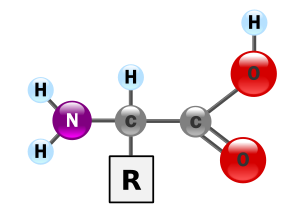
The general structure of an α-amino acid, with the
aminogroup on the left and the
carboxyl group on the right
3 types: Structual protein, body processing protein, food protein.
Structural Protein- Proteins which make up skin, muscles, organs, cells.
Body Processing Protein- Enzymes, hormones and toxins.
Food Protein- Digestible, non-toxic, ready for humans to consume. Meat, eggs, nuts, milk products.
Chemical Make up of Proteins- Carbon, Hydrogen, Oxygen, Nitrogen -----
Amino Acids.
Denaturing- Protein molecule changes shape. Heat is most common cause of denaturation. Eggs and meats become firm, coagulation.
Importance of Protein- Build body tissue for new growth and replace worn cells.
Amino Acids- There are 21 different ones. 9 of the 21 are essential. Our bodies cannot make, these 9. Need to get them from foods. A food with all 9 is considered to be a Complete Protein.
Methionine Leucine Histadine
Threonine Lysine
Tryptophan Valine
Isoleucine Phenylalanine
PERCENT OF PROTEIN IN FOODS
Set up a Proportion
Example: 20 is what % of 400?
Proportion: x = 20
100 400
To slove: Cross multiply and divide
400x = 2000
400x = 2000
400 400
x = 5 answer is 5%
In human nutrition
When taken up into the body in the diet, the twenty-two standard amino acids are either used to synthesize proteins and other biomolecules or oxidized to urea and carbon dioxide as a source of energy. The oxidation pathway starts with the removal of the amino group by a transaminase, the amino group is then fed into the urea cycle. The other product of transamidation is a keto acid that enters the citric acid cycle. Glucogenic amino acids can also be converted into glucose, through gluconeogenesis. Of the twenty-two standard amino acids, eight are called essential amino acids because the human body cannot synthesize them from other compounds at the level needed for normal growth, so they must be obtained from food. However, the situation is quite complicated since cysteine, taurine, tyrosine, histidine and arginine are semiessential amino acids in children, because the metabolic pathways that synthesize these amino acids are not fully developed. The amounts required also depend on the age and health of the individual, so it is hard to make general statements about the dietary requirement for some amino acids. (*) Essential only in certain cases.
[35][36]
