The study of the physical, chemical, and biological properties of foods, in addition to the factors affecting them and their ultimate effects upon the sensory, nutritional, and storage properties and the safety of foods. Food properties are influenced by growing, harvesting, and slaughtering practices, preservation and preparation methods, processing and storage conditions, and packaging. Food science and its applications must be further concerned with economics and marketing; food preferences of various populations; quality assurance and control; regulatory aspects dealing with safety, wholesomeness, and honest representation; and the production of affordable, quality food on a worldwide basis. Therefore, food science interfaces with and draws upon many disciplines, including chemistry, physics, mathematics, the plant and animal sciences, biochemistry, enzymology, microbiology, genetics, engineering, statistics, computer science, nutrition, toxicology, psychology, and law.
Food science deals with many food commodities and thousands of derived products. These commodities are processed for many reasons, including preservation, creation of new product forms, improvement of sensory and nutritional qualities, convenience, and removal of natural toxicants. Common processes are heating, cooling, freezing, concentration, dehydration, fermentation, sometimes irradiation, and packaging. Each process can be further classified by method. Each process utilizes unique equipment that requires optimization of variables to maximize product quality and minimize costs, and is capable of yielding product with distinct characteristics. Further, commodities are increasingly utilized for their constituents which are separated, extracted, chemically and physically modified, and then recombinedinto an endless variety of formulated and engineered foods that are indistinguishable from their source materials. This often requires the use of highly specific food additives to improve processing properties and acceptance factors, including nutritional quality. Nutrient levels and nutrient availability from foods may be decreased or increased by handling and processing practices.
Food science is also concerned with all aspects of food safety, including natural food toxicants, industrial contaminants, misuse of food additives, and microbiological contamination, as well as methods for the detection, exclusion, inactivation, removal, and regulation of harmful substances. See also Food engineering; Food manufacturing. Physical Properties of Food
Atom + Atom = Molecule
Molecules + Molecules = Food Substance
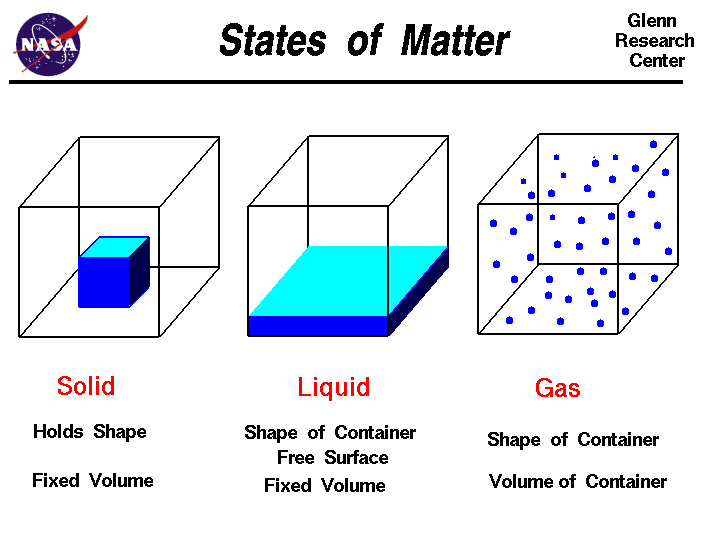
3 States of Matter
Solid- Liquid- Gas-
Molecules closely Molecules Molecules
packed together spaced apart far apart